



 Share Profile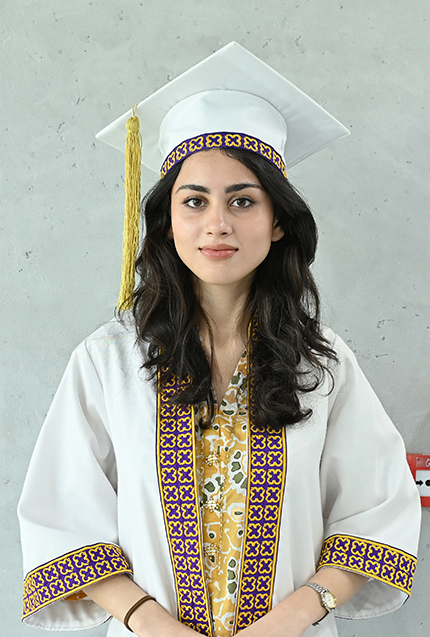
SYEDA SOHA ZAKA
Aspiration Statement
Studying Social Development and Policy at Habib University has strengthened my ability to solve complex problems and create positive change within organizations and their targeted communities.
Core Skills
- Microsoft Excel, Microsoft Powerpoint, Microsoft Word, STATA
Academic Awards / Achievements
- Academic LEAP Scholarship
Experience
Leadership / Meta-curricular
- Election Committee, Vice Chair Food & Hygiene, Vice President Sustainability Club, Wellness Peer
Internship / Volunteer Work
- Project intern, HBL (2nd December 2024 17th July 2025), Business and Risk Consultant Intern, A.F. Ferguson & Co. (3rd June 3rd July 2024), User Experience Designer, Codebase Technologies (2nd May 29th July 2022)
Publications / Creative Projects
- Research paper on impact of extreme temperature on women's safety in Pakistan
Final Year Project
Project Title
Impact of Extreme Temperature on Women's Safety in Pakistan
Description
Using the dataset from the Integrated Public Use Microdata Series Demographic Health Survey (IPUMS) of the Demographic and Health Survey (DHS) for Pakistan, this paper tests the main hypothesis that 'extreme temperatures do compromise women's safety in Pakistan. The paper will particularly focus on heat induced aggression that manifests itself into violence which compromises the health and safety of women in the household. The impact varies across socioeconomic classes where education seems to play a significant role. Understanding the intersection of gender dynamics and climate change is crucial for developing effective climate adaptation policies. Findings show limited accommodation availability, with low awareness among students and faculty. Students with invisible disabilities (including mental health conditions) often hesitate to seek help due to stigma or unclear procedures. While faculty express willingness to support, their efforts are hindered by inadequate training and inconsistent institutional policies. The study highlights the urgent need for better awareness campaigns, streamlined processes, and faculty training to create truly inclusive academic environments.